
Reviewed by Peter Berk, President and Chief Media Strategist, Berk Marketing · Last updated 7 September 2026
TL;DR
A radio host endorsement costs more than a standard produced spot, and how much more depends on the market, the host and the terms rather than on any published benchmark. The premium buys you the host’s personal credibility, category exclusivity, and measurably higher response rates. Live reads outperform produced spots by about 40%, and endorsement campaigns renew at an 85% rate, which tells you most advertisers find the investment worthwhile.
Looking for a custom quote on host endorsement pricing? Request a free consultation to compare rates across stations and formats.
Quick Answer A radio host endorsement costs more than a standard radio commercial, and there is no published rate for it. Costs depend on market size, host popularity, time slot, exclusivity, campaign length, and whether the endorsement is live or pre-recorded. Although more expensive, host endorsements often generate higher recall, stronger trust, and more leads than traditional produced radio spots.
What Is a Radio Host Endorsement?
A radio host endorsement is a paid advertisement where the show’s on-air personality voices the ad and puts their personal credibility behind the product or service. Peter Connolly of Live Personality Advertising has called talent endorsements “the holy grail of word-of-mouth advertising,” and the description fits. Instead of hearing a polished voiceover from a stranger, the listener hears a recommendation from someone they tune in to every day.
The radio host endorsement cost reflects that trust premium. You are not just buying airtime. You are renting the host’s relationship with their audience.
Host Reads, Live Endorsements, and Produced Spots: Know the Difference
These terms get thrown around interchangeably, but they mean different things, and the pricing varies for each.
Live endorsement. The personality delivers the ad during a live broadcast, often weaving it into whatever topics they are covering that day. They might banter with a co-host or share a personal story before transitioning into the pitch. The ad lives inside the show itself, not in a commercial break. This is the most expensive format.
Pre-recorded host read. The host voices the ad in advance so it sounds like a live read, but it airs during a scheduled commercial break. You get the host’s voice and credibility with more scheduling flexibility, typically at a slightly lower cost than a true live endorsement.
Produced spot. A professional voiceover artist reads scripted copy over music and sound effects. These are fundamentally different from endorsements. Produced spots are polished. Host reads are personal. The price gap between them reflects that distinction.
For a deeper breakdown of how to use each format, see our guide on host reads and live endorsements.
How Much Does a Radio Host Endorsement Cost?

Berk Marketing does not publish endorsement rates, and any figure you find online is either out of date, taken out of context, or somebody else’s negotiated deal. An endorsement is priced case by case, and the number depends far more on the variables below than on any published benchmark.
What is worth understanding before you ask for a quote is what you are actually being charged for. An endorsement costs more than a produced spot because you are buying three things at once: the airtime, the host’s time, and the host’s credibility with an audience that took years to build. The third is the genuinely scarce part, and it is the part that varies most from one station to the next.
What to ask a station to itemise
- The airtime cost and the talent fee, separately. One bundled number tells you nothing about which half is negotiable.
- Whether the talent fee is per spot, per week, or a flat commitment for the term.
- What category exclusivity is included, over what geography, and for how long.
- How many reads are genuinely live and how many are recorded and rotated.
- Whether the host is required to use the product, and how that is disclosed on air.
- What happens to the talent fee if the host leaves, is off for a period, or the show moves daypart.
A quote that cannot be broken down this way cannot be compared against anything, which is usually why it arrives as a single number.
What Drives the Cost Up or Down?
Radio host endorsement costs are not arbitrary. Several specific factors push the price in either direction.
Market Size and DMA Rank
This is the single biggest cost driver. A morning drive endorsement in New York or Los Angeles will cost many multiples of the same format in a market ranked 75th or lower. The top 100 radio markets vary enormously in audience size and pricing.
Host Audience Size and Loyalty
Here is a nuance that matters: it is not just the host’s cumulative audience that determines price. As one industry executive at Hubbard Radio put it, “It’s not a show’s size or cumulative audience that matters; it’s the listener’s loyalty to the host.” A mid-market host with a fiercely loyal audience can deliver better response rates than a big-name host whose listeners are passive.
Daypart
Morning drive commands the highest premiums. Management and morning shows typically generate the highest rates on the station. Afternoon drive comes next, followed by midday and evening. Weekend shows are generally cheapest.
Category Exclusivity
Host reads come with category exclusivity, meaning the host cannot read ads for your competitor during your campaign. This protection has real value, and it is baked into the cost. If you are in a competitive category like insurance or legal services, exclusivity alone can justify the premium.
Campaign Length
Stations and hosts require length-of-campaign commitments that vary. Longer commitments often come with better per-spot rates. A 13-week schedule will cost less per unit than a 4-week test, though testing shorter first makes sense for new advertisers.
Election Season Inventory Pressure
Political advertising floods radio stations every two years, especially in swing-state markets. During election season, available inventory shrinks and prices spike. If your campaign can launch before or after the political window, you will save significantly.
Format and Demographics
AM/PM drive time hosts on news and sports stations often reach upscale males who are hard to reach through other channels, as Barrett Media has noted. That demographic scarcity commands a premium. If you are targeting older male audiences specifically, sports talk endorsements can be particularly effective, but also particularly expensive.
Cost Factor | Impact | Why |
|---|---|---|
DMA Size | Very High | Larger audience |
Host Popularity | Very High | More trust |
Daypart | High | Morning shows cost more |
Category Exclusivity | High | Limits competing advertisers |
Campaign Length | Medium | Longer contracts lower rates |
Election Season | Medium | Inventory shrinks |
Station Format | Medium | Audience demographics |
Live vs Recorded | High | Live costs more |
How the Deal Works
Understanding the transaction mechanics helps you negotiate better and avoid surprises.
The Money Flow
Endorsement deals are purchased through the station, but the talent fee goes directly to the personality. Insiders on RadioDiscussions confirm this structure, noting that the fee is “pretty much determined by the personality.” The station facilitates the sale and takes its cut, but the host sets their own endorsement rate.
Agent Involvement
Top talent will hire an agent who gets a percentage of the deal. As one industry observer noted, “The agent knows all the factors involved,” including who owns the show, who gets residual revenue from podcasting, appearance fees, and endorsement fees. For nationally syndicated hosts, you will almost certainly be dealing with an agent or syndicator rather than a local sales rep.
Category Exclusivity Terms
When you buy a host endorsement, that host cannot endorse a competing product during your campaign. This is standard and non-negotiable at most stations. If you sell auto insurance, the host will not be reading ads for another auto insurance company while your contract is active.
Talent Incentives
At some station groups, talent earn bonuses when endorsement revenue hits specific benchmarks. This is worth knowing because it means hosts are often motivated to make the partnership work. They have a financial incentive to deliver results, not just read copy.
For talent facing declining base salaries, endorsements serve as an increasingly important income stream, according to industry consultant Randy Lane. That creates some negotiation leverage for advertisers, particularly those offering long-term commitments.
Is the Premium Worth It? Performance Data Says Yes
The radio host endorsement cost premium is significant, so the performance had better justify it. The data strongly suggests it does.
77% of listeners have acted on a host recommendation. According to Katz Radio Group data, that share of listeners have searched for or tried a product recommended by their favorite radio personality.
2.4 days to action. The average time for listeners to take action after hearing an audio ad is just 2.4 days, per Audacy research. That is a remarkably short conversion window for a non-digital channel.
40% more leads than produced spots. A case study reported by Inside Radio found that live reads averaged 250 leads per week, outperforming produced spots by 40%. Radio stations themselves consider live reads roughly 50% more effective than standard 60-second spots.
+10 points in unaided recall. SiriusXM Media research showed host reads resulted in 10 points higher unaided recall compared to pre-produced announcer-read ads.
85% campaign renewal rate. Ronnie Bloodworth from WMXC/Mobile reports that on-air talent endorsement campaigns renew at an 85% rate. Advertisers do not keep renewing campaigns that lose money.
To measure whether endorsements are paying off for your specific campaign, add call tracking to attribute leads directly to specific spots and hosts.
When the Premium Is NOT Worth It
Host endorsements are not always the right call. Skip the premium when:
Your offer has thin margins. If you cannot absorb a 2 to 3x higher cost per spot and still maintain a healthy cost per acquisition, produced spots may be the smarter buy.
The demographic fit is wrong. Talk and sports talk hosts skew toward older male audiences. If your product targets a demographic that does not match, the host’s influence will not translate.
Your message is heavily scripted. Endorsements work because the host puts the ad in their own words. If legal or compliance requirements force rigid script adherence, you lose the natural delivery that makes endorsements effective.
You need precise frequency control. Live endorsements vary in exact timing and length. If your campaign requires rigid scheduling, pre-recorded host reads or produced spots give you more control.
For more on which creative formats work best in different scenarios, we have a dedicated talk radio guide.
Radio Host Endorsement vs Produced Spot
Metric | Produced Spot | Host Endorsement |
|---|---|---|
Cost | Lower | Higher |
Trust | Medium | High |
Recall | Medium | High |
CTR/Response | Baseline | Higher |
Lead Quality | Medium | Higher |
Typical ROI | Moderate | Often Higher |
Should You Buy a Host Endorsement?
Situation | Recommendation |
|---|---|
Launching a new brand | Yes |
Local service business | Yes |
Brand awareness campaign | Yes |
Very small budget | No |
Highly regulated messaging | Usually No |
Direct response campaign | Yes, if tracked |
FTC Disclosure Rules for Radio Endorsements
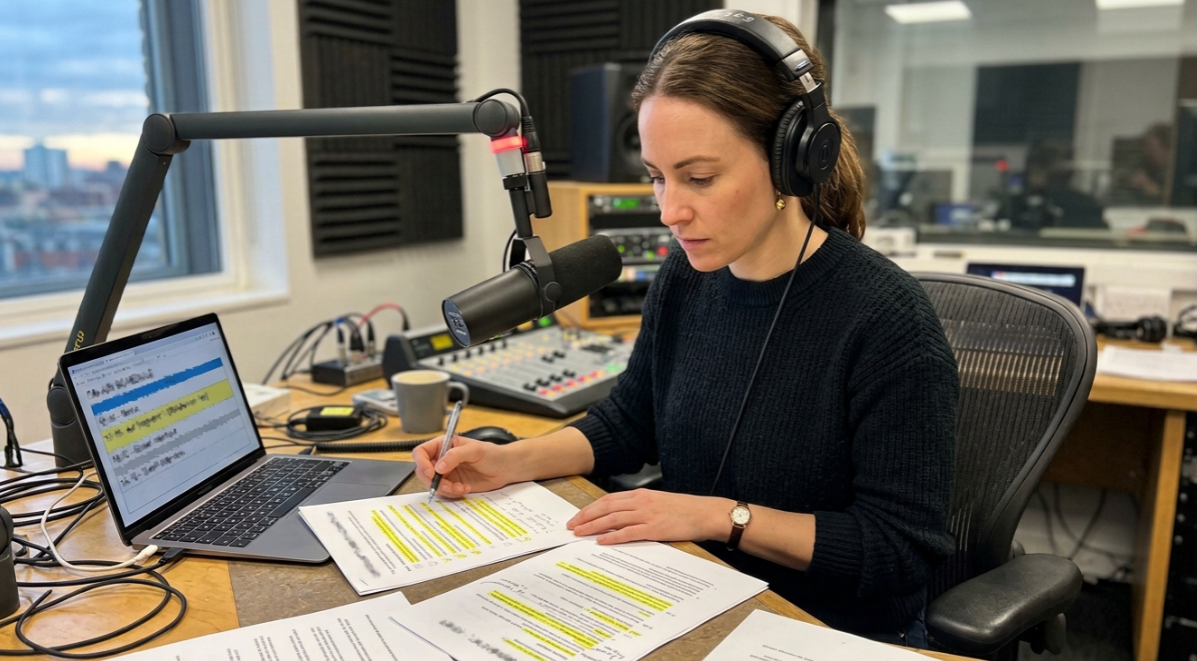
The Federal Trade Commission updated its Endorsement Guides in 2023, and the new rules specifically call out radio and podcast personalities.
Disclosure is mandatory. Any on-air testimonial endorsement, whether in an advertisement, in program content, or on a talk show, requires that the paid relationship be disclosed. The FTC says the disclosure “should be delivered in a volume, speed, and cadence sufficient for ordinary consumers to easily hear and understand.”
Hosts are personally liable. This is the big change. Under the updated guidelines, endorsers themselves can be held liable for misleading statements made during a product pitch. A radio personality paid to try a product and report results on the air needs to ensure their statements are truthful and that the results claimed align with what the advertiser can actually prove.
What this means for advertisers. You need to brief hosts thoroughly on what claims are supportable. Provide clear talking points with documented proof. If your host goes off-script with unsupported claims, both you and the host face potential FTC enforcement action.
Who Benefits Most from Radio Host Endorsements?
Host endorsements often produce the strongest ROI for:
HVAC companies
Roofing contractors
Attorneys
Auto dealerships
Healthcare providers
Financial advisors
Local retailers
Home improvement companies
Political campaigns
Event promoters
These businesses typically benefit because trust and local credibility play a major role in customer decision-making.
How to Reduce Radio Host Endorsement Costs
The radio host endorsement cost does not have to break your budget. Several strategies can stretch your investment.
Use an Independent Media Buyer
Buying station-direct means you are negotiating against a sales team whose job is to maximize revenue. An independent buyer negotiates across competing outlets on your behalf, creating price competition. This alone can meaningfully reduce your endorsement cost per spot.
Pair Endorsements with Remnant Spots
One of the most effective strategies is combining a smaller endorsement buy with a larger volume of remnant radio spots at steep discounts. The endorsements build credibility and drive initial response. The remnant spots provide frequency and reinforcement at a lower cost than fixed-placement inventory.
Test with Pre-Recorded Host Reads First
Before committing budget to live endorsements, test with pre-recorded host reads. You still get the host’s voice and credibility at a lower price point. If the response justifies upgrading to live reads, do it with data behind your decision.
Negotiate Multi-Station or Multi-Show Packages
Bundling endorsement buys across multiple stations or shows in a market gives you leverage to negotiate better per-unit pricing. The station benefits from a larger total commitment, and you benefit from volume discounts.
Consider Mid-Market Hosts with Loyal Audiences
A mid-market host whose listeners trust them deeply can outperform a major-market host with a larger but less engaged audience. Remember: loyalty matters more than raw cume. Targeting the right hosts rather than the biggest names often costs less and can return more.
For more tactics on getting better rates, see our guide on how to negotiate last-minute airtime rates.
Get a Custom Radio Host Endorsement Quote
Radio host endorsement costs vary too much by market, host, and format for a single rate card to work. The numbers in this guide give you a solid framework for budgeting, but the right next step is getting a quote tailored to your specific goals and markets.
Get a free custom media plan from an independent buyer who can compare endorsement rates across stations, negotiate on your behalf, and help you decide whether a host endorsement, a pre-recorded host read, or a produced spot is the right fit for your budget.
Frequently Asked Questions
How much more does a radio host endorsement cost compared to a regular ad?
More, and the gap is wider in larger markets. You are paying for the airtime, the host’s time and the host’s credibility rather than airtime alone, so the two are not really comparable line for line. Ask the station to quote the airtime and the talent fee separately.
Who sets the endorsement fee, the station or the host?
Industry insiders confirm that endorsement fees are “pretty much determined by the personality.” The deal is purchased through the station, but the talent fee goes to the host. Top talent may have agents handling negotiations.
What does category exclusivity mean in a radio endorsement deal?
It means the host cannot endorse a competing product or service while your campaign is active. If you sell home insurance and buy an endorsement, no other home insurance company can use that host during your contract period.
Are radio hosts personally liable for endorsement claims?
Yes. Under the FTC’s 2023 updated Endorsement Guides, endorsers can be held liable for misleading statements. Hosts need to ensure any claims they make are truthful and substantiated.
How quickly do listeners respond to radio endorsements?
Research from Audacy shows the average time to action after hearing an audio ad is 2.4 days. Host endorsements tend to drive faster response than produced spots because of the trust factor.
Is a live endorsement better than a pre-recorded host read?
Live endorsements generally outperform pre-recorded reads by about 10%, according to Inside Radio data. But pre-recorded host reads still significantly outperform standard produced spots. Pre-recorded reads are a good middle ground if budget is a constraint.
What is the minimum budget for a radio host endorsement campaign?
It depends on the market and on the host. What matters more than the weekly number is whether the schedule carries enough weight for the same listener to hear the message repeatedly. Berk Marketing works from a five thousand dollar a week floor and prices the rest against the specific plan.
How do I know if a radio host endorsement is actually working?
Use dedicated phone numbers or vanity URLs to track responses from specific hosts and stations. Measuring radio advertising effectiveness requires attribution tools, but the 85% renewal rate for endorsement campaigns suggests most advertisers see clear returns.
Request a free radio media plan
Tell us who you want to reach and what you want to accomplish. No obligation, and nothing is placed until you approve it.
Ready to plan your radio buy?
Berk Marketing represents advertisers, not radio stations or media companies.